
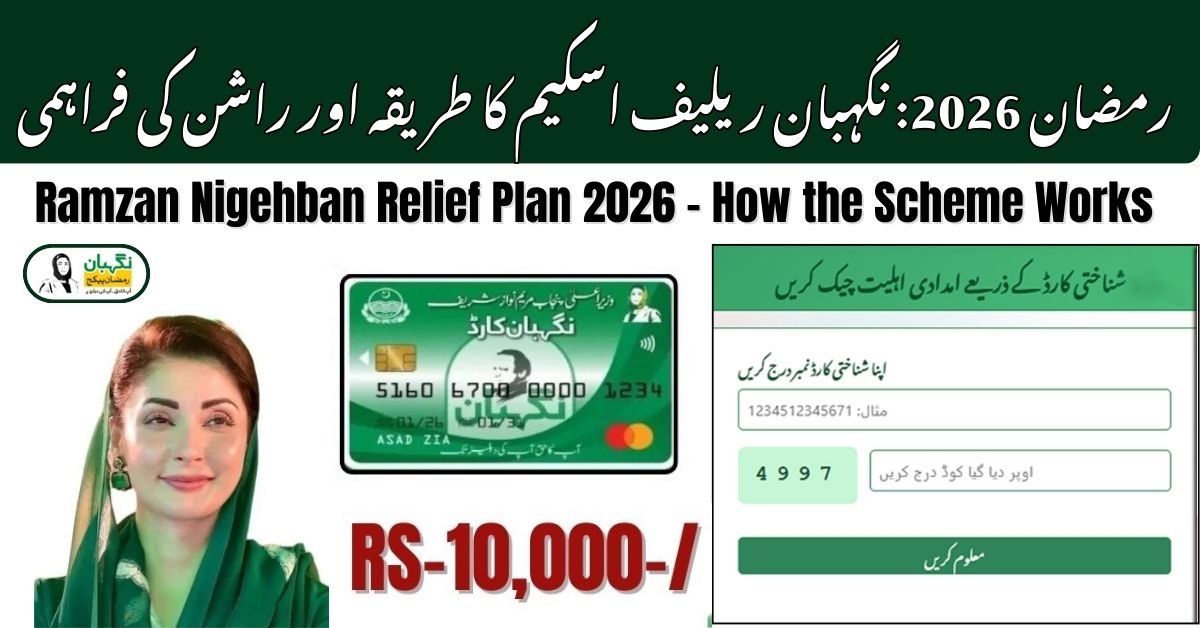
Nigehban Ramzan Package Eligibility is the first and most important step in understanding how the Ramzan Nigehban Relief Plan 2026 works. This initiative has been introduced to support families who face financial difficulties during the holy month of Ramadan. With food prices rising and household expenses increasing, many low-income families struggle to manage daily necessities. The relief plan aims to reduce this burden by providing organised rashan support, financial assistance, and easy access to essential items. Through verified data and a transparent registration process, the program ensures that only deserving households benefit. Special attention is given to widows, elderly individuals, and daily wage earners so they can observe Ramadan with dignity and peace. By combining fair verification, structured distribution, and community-focused support, this scheme creates a reliable safety net for vulnerable families.

Highlights Table
| Feature | Details |
| Program Name | Ramzan Nigehban Relief Plan 2026 |
| Package | Nigehban Ramzan Rashan Package 2026 |
| Assistance Type | Free rashan delivery and Rs 10000 rashan aid (where applicable) |
| Target Beneficiaries | Low income family support and vulnerable households |
| Registration Method | PSER rashan registration and survey verification |
| Eligibility Check | PMT score rashan evaluation |
| Verification System | CNIC-based confirmation |
| Distribution | Home delivery rashan and local centres |
| Special Focus | Widows elderly rashan and daily wage workers aid |
Latest Update 2026
For 2026, the Ramzan Nigehban Relief Plan has been further improved to ensure faster identification of deserving families and smoother distribution of assistance. Authorities have strengthened the verification system to reduce delays and ensure transparency. More local facilitation points have been arranged to manage crowds efficiently, while home delivery rashan services have been expanded in selected areas to support elderly and vulnerable individuals. The updated process focuses on accurate data verification, timely delivery of ration packages, and better coordination between survey records and distribution teams so that no eligible household is left without support during Ramadan.
What Is the Ramzan Nigehban Relief Plan 2026?
The Ramzan Nigehban Relief Plan 2026 is designed to provide essential food supplies and financial relief to families who cannot meet increased Ramadan expenses. Unlike general subsidy programs, this scheme specifically targets deserving households through verified socioeconomic data.
The program ensures Ramzan rashan support families receive timely assistance without facing long queues or complicated procedures. Many beneficiaries receive a doorstep ration bag, allowing them to access help respectfully and conveniently.
Why This Program Is Important
Ramadan is a sacred month, but it also brings additional financial pressure for many households. Food consumption increases, and families must manage sehri and iftar arrangements along with regular expenses. For low-income families, this can become a serious challenge.
This program is important because it:
- Helps families afford essential food during Ramadan.
- Reduces the impact of inflation on vulnerable households.
- Ensures fair access to relief through a transparent system.
- Supports widows, elderly citizens, and daily wage earners who often have no stable income.
- Promotes dignity by providing organised assistance instead of charity-based distribution.
- Strengthens community welfare and social balance.
By addressing real financial needs, the initiative allows families to focus on worship and togetherness rather than worrying about daily expenses.
How the Scheme Works
The working system of the Nigehban Rashan Program 2026 is based on identification, verification, and distribution.
- Data Identification: Families are identified through national survey records and PSER rashan registration.
- Eligibility Screening: Authorities evaluate PMT score rashan criteria to confirm financial need.
- CNIC Verification: Records are verified through the national database to ensure authenticity.
- Beneficiary Matching: Eligible households may also be cross-checked with welfare program records.
- Rashan Distribution: Approved families receive free rashan delivery or collection instructions.
- Financial Aid Support: In selected cases, Rs 10000 rashan aid is provided to help manage expenses.
This structured approach ensures transparency and prevents misuse of resources.
Eligibility Criteria
To receive assistance under this scheme, families must meet specific Nigehban Ramzan Package Eligibility conditions. These criteria help ensure that support reaches only those who genuinely need it.
Eligible applicants usually include:
- Families living below the poverty threshold.
- Households registered in PSER rashan registration or government survey data.
- Individuals with low PMT score rashan classification.
- Widows elderly rashan beneficiaries who do not have stable income.
- Daily wage workers aid applicants affected by irregular earnings.
- Families without government employment or strong financial assets.
- Households verified through CNIC authentication and socioeconomic records.
Applicants must ensure their personal and family information is correct to avoid disqualification during verification.
How to Check Payment Status
Beneficiaries can easily confirm whether their financial assistance or rashan support has been approved by following these steps:
- Keep your original CNIC number ready.
- Check your status through the official verification message or notification system.
- Visit the assigned facilitation centre if you do not receive a message.
- Provide your CNIC details to confirm eligibility and payment approval.
- After confirmation, collect your ration or receive information about home delivery rashan.
- If Rs 10000 rashan aid is approved, follow the instructions given in the confirmation message to receive the amount.
Always ensure your registered mobile number is active so you can receive timely updates.
Who Is Not Eligible?
To maintain fairness and transparency, the following groups are generally not included:
- Government employees with stable salaries.
- High-income households or business owners with strong assets.
- Individuals providing incorrect or incomplete information.
- Families already receiving similar large-scale subsidies.
- Applicants not found in the official verification database.
These rules ensure resources remain reserved for the most deserving citizens.
Distribution Method and Support System
To make access easier, the scheme uses multiple delivery methods:
- Home Delivery Rashan: Supplies delivered directly to homes in many areas.
- Doorstep Ration Bag: Special arrangements for elderly or disabled individuals.
- Local Distribution Centres: Organised collection points to avoid overcrowding.
- Ramzan Rashan Support Families Network: Ensures community-level coordination.
This system saves time and transportation costs while maintaining dignity.
Key Benefits of the Relief Plan
The Ramzan Nigehban Relief Plan 2026 provides several meaningful advantages:
- Ensures food security during Ramadan.
- Reduces financial pressure on struggling households.
- Offers free rashan delivery for convenience and respect.
- Supports vulnerable citizens through organised welfare planning.
- Maintains fairness through verified eligibility checks.
- Helps families focus on worship rather than financial stress.
Role of Registration and Verification
Proper registration is essential to receive support. Families must ensure their information is correctly included in PSER rashan registration systems. Verification through CNIC records ensures that aid is distributed transparently and only once per eligible household.
Accurate documentation helps authorities deliver assistance efficiently and prevents delays.
Common Mistakes to Avoid
Applicants often face problems because of small but important errors. Avoid these issues:
- Providing incorrect CNIC details during registration.
- Failing to complete PSER rashan registration properly.
- Ignoring eligibility confirmation notifications.
- Submitting outdated household information.
- Visiting unauthorized distribution locations.
- Applying multiple times, which may cause verification delays.
Avoiding these mistakes ensures smoother processing and faster support.
How This Plan Strengthens Communities
This relief initiative is not only about providing rashan. It plays a wider role in social stability by helping families maintain their standard of living during Ramadan. When vulnerable households receive timely assistance, communities become stronger and more balanced.
Support for widows elderly rashan recipients, daily wage workers aid groups, and low income family support networks ensures that no deserving family is left behind.
Note
Our website provides information about government schemes to help the public stay informed. Whenever a new update, policy change, or official announcement is made, this article will be updated so readers can always access the latest and most accurate details.
Conclusion
Ramzan Nigehban Relief Plan 2026 is a carefully structured initiative aimed at supporting families who face financial hardship during Ramadan. By combining verified eligibility checks, organised rashan distribution, and targeted assistance such as free rashan delivery and financial aid, the scheme ensures that help reaches those who truly need it. Its transparent system, focus on dignity, and efficient delivery methods make it an essential support program for vulnerable communities. Families who qualify should complete their registration carefully and stay informed to benefit fully from this initiative. Through this relief plan, the goal is not only to reduce economic stress but also to allow every deserving household to observe Ramadan with peace, stability, and dignity.
FAQs – Ramzan Nigehban Relief Plan 2026 – How the Scheme Works
Q1: What is the Ramzan Nigehban Relief Plan 2026?
Answer: It is a welfare initiative designed to provide rashan support and financial assistance to deserving families during Ramadan so they can manage essential household expenses with ease.
Q2: Who can apply for this scheme?
Answer: Low-income families, widows, elderly individuals, and daily wage earners who are facing financial difficulties and are registered in official survey records can apply.
Q3: What type of assistance is provided under this plan?
Answer: Eligible families receive essential food items such as flour, rice, pulses, sugar, and cooking oil. In some cases, financial help like Rs 10,000 rashan aid may also be provided.
Q4: How are beneficiaries selected?
Answer: Families are selected through verified socioeconomic data, PSER survey registration, PMT score evaluation, and CNIC-based verification to ensure transparency.
Q5: How does the distribution system work?
Answer: Approved families either receive rashan through home delivery services or collect it from designated distribution centres arranged by the administration.
Q6: How can I check my eligibility status?
Answer: You can check your status using your CNIC through the official verification message system or by visiting the assigned facilitation centre.
Q7: What is the PMT score and why is it important?
Answer: The PMT (Proxy Means Test) score measures a household’s financial condition. A lower score means higher need and increases the chances of receiving assistance.
Q8: Is registration required to receive support?
Answer: Yes, families must complete PSER rashan registration or be included in government survey databases for verification and approval.
Q9: Who is not eligible for the Ramzan Nigehban Relief Plan?
Answer: Government employees with stable income, high-income households, and individuals providing incorrect information are generally not eligible.
Q10: Can elderly or disabled individuals receive special support?
Answer: Yes, special arrangements such as doorstep ration delivery are made for elderly citizens and persons who cannot visit distribution centres.
Q11: What should I do if I do not receive a confirmation message?
Answer: You should visit the nearest facilitation centre with your original CNIC to verify your status and receive guidance.
Q12: What is the main objective of this relief plan?
Answer: The main goal is to reduce financial stress during Ramadan and ensure that deserving families can observe the holy month with dignity, stability, and peace of mind.