
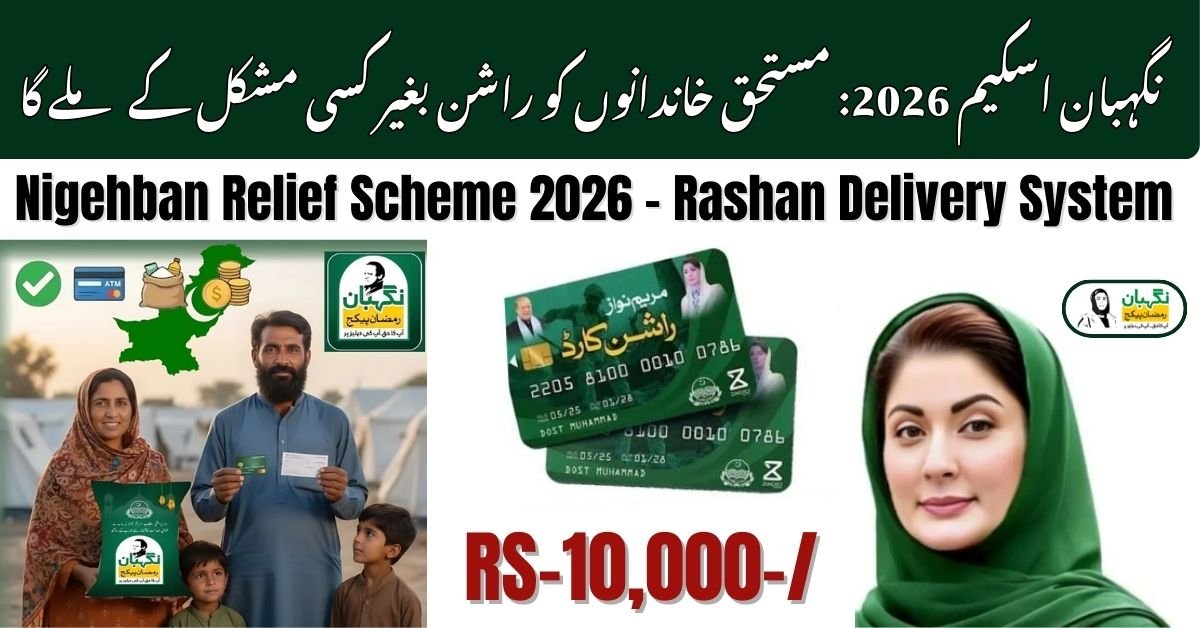
Social Relief Scheme 2026 is a major welfare initiative designed to provide essential food support to low-income families during Ramzan through a fair and transparent distribution system. The goal of this program is to ensure that deserving households receive timely Rashan without facing long queues, favoritism, or complicated procedures. This relief effort focuses on dignity, accessibility, and accountability. The scheme uses verified socio-economic data, digital tracking, and organized logistics to deliver Rashan directly to beneficiaries. Families registered through the Punjab Socio-Economic Registry PSER are prioritized so that assistance reaches those who truly need it. This modern approach not only reduces misuse but also builds public trust by ensuring every package is delivered through a documented and monitored system across Punjab.

Program Highlights
| Feature | Details |
| Program Name | Nigehban Social Relief Scheme 2026 |
| Purpose | Provide free Rashan to deserving families during Ramzan |
| Distribution Method | Transparent door-to-door delivery |
| Verification System | Punjab Socio-Economic Registry PSER data |
| Support Type | Essential food items for Sehri and Iftar |
| Tracking Method | Rashan QR code scanning and digital verification |
| Target Beneficiaries | Low-income and registered households |
| Delivery Area | Punjab-wide coverage |
| Monitoring Authority | Provincial administration and local teams |
What Is the Nigehban Social Relief Scheme 2026?
Nigehban Social Relief Scheme 2026 is a structured welfare program created to ensure that vulnerable families receive essential food supplies in a respectful and organized manner. Unlike traditional aid models where beneficiaries had to stand in long lines, this scheme introduces a Transparent Rashan Delivery model that brings assistance directly to homes.
The program is part of a broader provincial relief strategy focusing on social protection, poverty reduction, and efficient resource distribution. By using verified PSER Rashan distribution data, authorities can identify eligible households accurately and prevent duplication or misuse of benefits.
Why This Scheme Is Important
This initiative plays a crucial role in addressing real challenges faced by struggling families, especially during Ramzan when food expenses increase significantly.
Key Importance of the Scheme
- Ensures food security for deserving households.
- Eliminates the need for beneficiaries to travel or wait in long queues.
- Promotes dignity through home delivery Rashan Punjab services.
- Uses verified socio-economic data for fair selection.
- Introduces transparency through Rashan QR code scanning.
- Reduces chances of corruption or unfair distribution.
- Strengthens trust between citizens and welfare institutions.
By combining technology with community outreach, the scheme creates a modern welfare model that focuses on both efficiency and compassion.
Rashan Delivery System 2026 – How It Works
The Rashan Delivery System 2026 follows a step-by-step mechanism designed for clarity and accountability.
1. Identification Through PSER Data
Families registered in the Punjab Socio-Economic Registry PSER are evaluated based on income level, household size, and financial vulnerability.
2. Verification of Beneficiaries
Authorities cross-check records to confirm eligibility under the Nigehban eligibility criteria.
3. Issuance of Nigehban Rashan Cards
Verified households are enlisted into the system and assigned identification for tracking deliveries.
4. Door-to-Door Distribution
Under the Nigehban Rashan Program Door to door Rashan delivery model, distribution teams deliver packages directly to homes.
5. QR Code Confirmation
Each delivery is verified through Rashan QR code scanning to ensure the right package reaches the right family.
6. Monitoring and Transparency
Digital records help track every transaction, making the process transparent and accountable.
Rashan Package 2026 – What Families Receive
The Nigehban Package 2026 includes essential grocery items needed for daily meals during Ramzan.
Typical Rashan Bag Contents
- Flour (Atta)
- Rice
- Cooking Oil
- Lentils (Daal)
- Salt and Basic Spice
- Sugar
- Dates for Iftar
- Tea
These items are selected to cover the nutritional needs of an average household, helping families manage Sehri and Iftar without financial stress.
Eligibility Criteria for Nigehban Social Relief Scheme
To ensure fairness, the government has defined clear eligibility standards.
Who Can Qualify?
- Families registered in the Punjab Socio-Economic Registry PSER.
- Households with low monthly income.
- Individuals not receiving duplicate assistance from other programs.
- Widows, senior citizens, and labor-based families.
- Residents verified through local administrative surveys.
This structured approach ensures that assistance reaches genuinely deserving citizens rather than being distributed randomly.
Transparent Rashan Delivery – A Modern Welfare Approach
The Transparent Rashan Delivery system represents a shift from traditional subsidy distribution to a monitored and data-driven model.
How Transparency Is Maintained
- Digital beneficiary verification prevents duplication.
- QR-based confirmation records each delivery.
- Centralized monitoring tracks distribution progress.
- Organized logistics reduce delays and confusion.
- Complaint mechanisms allow families to report issues.
This system strengthens accountability while ensuring timely assistance.
Common Mistakes Applicants Should Avoid
Even though the process is simple, some families face delays due to avoidable errors.
Frequent Issues Include
- Not updating PSER survey information
- Providing incorrect household details.
- Expecting delivery without proper registration
- Ignoring official verification messages.
- Sharing inaccurate contact information.
- Assuming automatic eligibility without assessment.
Avoiding these mistakes helps ensure smooth participation in the scheme.
Latest Update About the Scheme
Recent administrative updates show that verification checks have been strengthened and delivery monitoring has been expanded to ensure that every registered household receives Rashan without delay. Additional field teams have been deployed to improve coverage in both urban and rural areas, while digital tracking tools are being used to enhance transparency throughout the distribution cycle.
Note for Readers
This website provides information about government schemes to guide the public. As soon as any new update is announced, this article will be updated so readers can always get the latest information.
Conclusion
Nigehban Social Relief Scheme 2026 is more than just a Ramzan assistance program; it is a structured effort to deliver dignity, fairness, and transparency to welfare distribution. By combining verified socio-economic data, organized logistics, and digital tracking, the scheme ensures that Rashan reaches deserving families without complications. The introduction of door-to-door delivery, QR verification, and PSER-based identification reflects a modern approach to social protection. For thousands of households, this initiative reduces financial pressure and allows them to observe Ramzan with peace of mind. As the system continues to improve, it sets a strong example of how organized planning and responsible governance can create an efficient and humane relief model for the future.
FAQs – Nigehban Social Relief Scheme 2026
Q1: What is the Nigehban Social Relief Scheme 2026?
Nigehban Social Relief Scheme 2026 is a welfare program designed to provide free Rashan to deserving families during the holy month of Ramzan through a transparent and organized delivery system.
Q2: Who can apply for this scheme?
Families with low income, those registered in the Punjab Socio-Economic Registry (PSER), widows, senior citizens, and daily wage earners can qualify based on eligibility verification.
Q3: How are families selected for Rashan support?
Beneficiaries are identified using verified socio-economic data collected through PSER surveys to ensure only deserving households receive assistance.
Q4: How will Rashan be delivered to beneficiaries?
Rashan is delivered through a door-to-door system, allowing families to receive food packages at their homes without standing in long queues.
Q5: What items are included in the Rashan package?
The package usually contains essential food items such as flour, rice, cooking oil, lentils, sugar, salt, dates, and tea needed for Sehri and Iftar.
Q6: Is registration required to receive Rashan?
Yes, families must be registered in the PSER database and verified to be eligible for the program.
Q7: What makes this scheme different from previous relief programs?
This scheme uses a transparent delivery model, digital verification, and QR code tracking to prevent duplication and ensure fair distribution.
Q8: Can someone receive Rashan if their data is not updated?
No, outdated or incorrect information may lead to delays or disqualification, so keeping PSER data updated is important.
Q9: Is there any fee for receiving assistance under this scheme?
No, the Rashan provided under this program is completely free for eligible families.
Q10: How can families stay informed about new updates?
Families should follow official announcements and keep their registration details accurate, as updates are shared whenever new phases or improvements are introduced.
Q11: What should beneficiaries do if they face any issue during delivery?
They should report the issue to local administration teams so it can be resolved quickly through the monitoring system.
Q12: Will this scheme continue in the future?
The program is designed as part of ongoing social welfare efforts, and future continuation depends on government planning and public needs.