
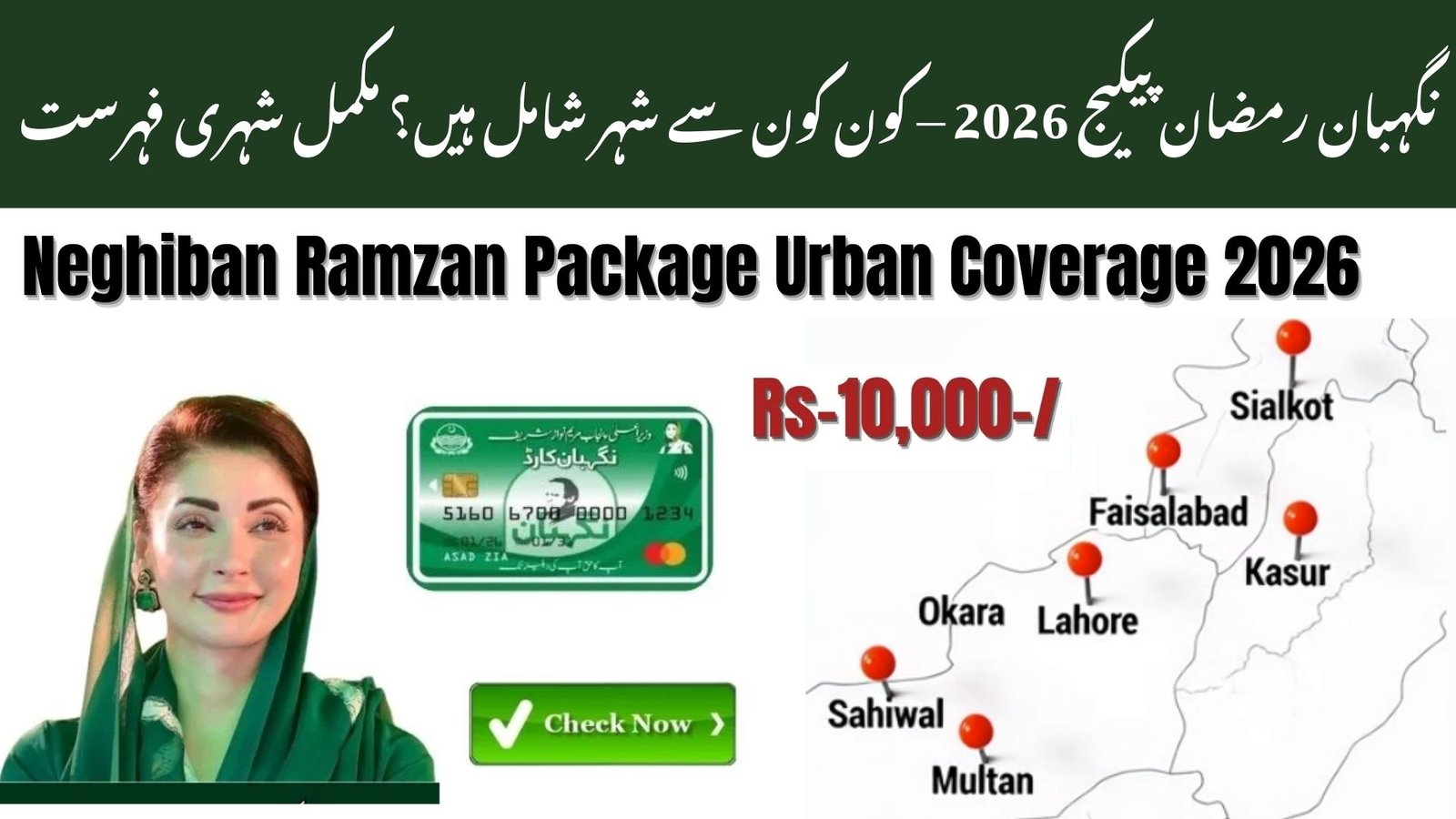
The Negahban Ramzan Package Urban Coverage 2026 is a major welfare initiative aimed at supporting low-income families living in Pakistan’s big cities, especially across Punjab, during the holy month of Ramzan. In urban areas, where daily expenses are high and incomes are limited, many families struggle to afford basic food items like atta (flour), cooking oil, daal (pulses), rice, and other essential groceries.
To ease this pressure, the government has expanded the Negahban Ramzan relief program to ensure that deserving families in cities receive ration support in a fair, transparent, and dignified way. The 2026 program places special focus on city-wise distribution, improved verification through official records, and better delivery systems so that help reaches the right households on time. This includes support for working-class families, daily wage earners, and people living in densely populated urban areas and informal settlements.
With this urban-focused approach, the Negahban Ramzan Package 2026 ensures that families living in large cities are not left behind and can spend Ramzan with peace of mind, food security, and dignity without the constant stress of managing rising grocery costs.
Latest Update – Urban Coverage Expansion for 2026
For 2026, the Government of Punjab has expanded the Negahban Ramzan Package Urban Coverage to better support families living in crowded city areas. To make sure help reaches only deserving people, authorities have improved the verification system using PSER data and CNIC-based checking. This helps stop fake entries and duplicate registrations.New surveys are also being carried out in different districts to include families who were missed earlier. Special attention is being given to people living in informal settlements, rented homes, and newly developed urban areas. Local administrations are working with union councils to update household records and speed up the approval process.
The Rashan distribution system has been improved with better planning and monitoring so that food supplies reach families on time during Ramzan. The government has clearly stated that this package is completely free, and people should not trust agents, middlemen, or unofficial sources for registration or information.Urban residents are advised to keep their CNIC information updated and stay available for verification visits or official SMS messages to ensure smooth inclusion in the 2026 Negahban Ramzan relief program.

Program Highlights – Urban Coverage 2026
| Feature | Details |
| Program Name | Neghiban Ramzan Package Urban Areas 2026 |
| Coverage Type | City Wise Coverage Across Punjab |
| Target Beneficiaries | Low-Income Urban Families |
| Distribution Method | Door-to-Door Rashan Delivery |
| Major Cities Included | Lahore, Faisalabad, Multan, Rawalpindi and Others |
| Registration Verification | PSER Survey & CNIC Validation |
| Delivery Timeline | Throughout Ramzan 2026 |
| Support Type | Free Essential Rashan Package |
| Monitoring Authority | Punjab Government Relief Program |
City Wise Coverage Under Neghiban 2026
The City Wise Coverage Neghiban 2026 model ensures that assistance reaches families living in large urban populations where inflation impacts daily wages the most. Major metropolitan areas have been prioritized for organized and timely distribution, with special planning based on population density, poverty ratios, and administrative accessibility.
Major Cities Included
- Lahore – Full-scale implementation including inner-city and peri-urban zones, ensuring coverage of both formal and informal housing sectors.
- Faisalabad – Coverage of industrial labor communities where thousands of daily wage earners rely on stable food support.
- Multan – Focus on densely populated residential clusters with coordinated union council supervision.
- Rawalpindi – Distribution aligned with verified municipal records to ensure transparency.
- Other Punjab Cities Ramzan Package Areas – Expansion into secondary cities for wider reach and balanced allocation of resources.
This planned expansion ensures equal attention to both large and mid-sized cities rather than concentrating relief in only a few locations.
Urban Rashan Package Punjab – How It Works
The Urban Rashan Package Punjab follows a structured system to maintain fairness and transparency while making the process simple for beneficiaries:
- Authorities verify eligible families through socio-economic data and survey records.
- Approved households are mapped district-wise for delivery planning and logistics management.
- Rashan packages are dispatched through supervised distribution teams working under local administration.
- Beneficiaries receive items at their doorstep to avoid long queues or travel expenses.
- Monitoring teams ensure that deliveries are recorded properly to prevent duplication or misuse.
This system reduces administrative delays and allows families to receive support in a respectful and organized manner.
Eligibility Criteria for Neghiban Ramzan Package Urban Coverage
To ensure that relief reaches only deserving households, the government has defined clear eligibility guidelines for urban residents. These criteria help identify families genuinely facing financial hardship:
- Applicant must be a resident of Punjab living in a registered urban area.
- Household must fall under the low-income or financially vulnerable category.
- CNIC must be valid and verified through official records.
- Family data should be included in the PSER survey or relevant government database.
- Applicants should not be receiving duplicate benefits from other major relief programs.
- Preference is given to daily wage earners, widows, senior citizens, and labor-class families.
- Accurate home address is required to facilitate door-to-door delivery.
These criteria help authorities identify genuine beneficiaries and deliver support transparently across cities while ensuring fairness in distribution.
Who Is Not Eligible for This Package
The program targets only deserving households, so certain applicants may not qualify:
- Families with stable high income or government-grade salaries.
- Individuals already receiving major financial aid from multiple government schemes.
- Applicants with incorrect or unverified CNIC information.
- Households not registered or not found in the PSER survey/database.
- People providing incomplete or false residential details.
- Business owners or property holders with strong financial standing.
These checks ensure that relief reaches those who genuinely need assistance during Ramzan.
Why This Program Is Important
The Neghiban Ramzan Package Urban Coverage is important because it supports families living in expensive urban environments where daily necessities cost more and income often remains limited. Many city residents depend on daily wages and face financial pressure during Ramzan due to increased food expenses. This program ensures that vulnerable households receive essential ration on time, helping them observe the holy month with dignity and peace of mind. It also reduces inequality by extending government relief to densely populated areas that are usually harder to manage during large-scale welfare distributions. By targeting urban poverty directly, the initiative strengthens community stability and prevents food insecurity during a spiritually significant time.
Benefits of Neghiban Ramzan Package Urban Coverage
- Reduces financial pressure on low-income city residents.
- Ensures access to essential food during Ramzan.
- Supports labor-class families affected by inflation and unstable incomes.
- Promotes dignity through home delivery instead of public queues.
- Strengthens trust through transparent verification systems.
- Improves nutritional stability for children and elderly members.
- Helps families allocate their limited income to other essential needs like utilities and education.
- Creates an organized relief structure that can be replicated for future welfare programs and emergency support initiatives.
How to Check Payment Status
Beneficiaries can easily verify their payment or ration delivery status through the official system:
- Open the SMS app on your registered mobile number.
- Type your 13-digit CNIC number (without dashes).
- Send it to 8070.
- Wait for the confirmation message.
- You will receive details about eligibility, approval, or delivery status.
You may also receive updates from local administration teams regarding doorstep delivery in your area. Always rely on official messages to track your assistance safely.
Common Mistakes to Avoid
- Providing an incorrect CNIC number during verification.
- Using an unregistered mobile number for communication.
- Assuming automatic eligibility without PSER survey completion.
- Missing official notifications regarding delivery timelines.
- Giving incomplete address details for door-to-door delivery.
- Trusting unofficial messages instead of verified government updates.
Note:
Our website provides information about government schemes and relief programs. As soon as any new update or policy change is announced, this article will be updated to keep readers informed with the latest details.

Conclusion
The Neghiban Ramzan Package Urban Coverage 2026 represents a significant step toward inclusive welfare by ensuring that families living in major cities receive timely and respectful assistance during Ramzan. By focusing on city-wise planning, verified eligibility, and door-to-door delivery, the program addresses the real challenges faced by urban populations where living costs are highest. Its structured implementation across Lahore, Faisalabad, Multan, Rawalpindi, and other Punjab cities demonstrates a strong commitment to equitable distribution and social support. As urban communities continue to grow, initiatives like this play a vital role in strengthening social protection systems and ensuring that no deserving household is left behind during the holy month.
Neghiban Ramzan Package Urban Coverage 2026 – City Wise Coverage Guide (FAQs)
1. What is the Neghiban Ramzan Package Urban Coverage 2026?
It is a relief initiative designed to provide free or subsidized rashan to eligible families living in urban areas during the month of Ramzan to help them manage essential household food expenses.
2. Which cities are included in the Urban Coverage Program?
The package covers major metropolitan cities, divisional headquarters, and selected municipal areas where a large number of low-income families reside. Local administration announces the final city-wise list.
3. Who is eligible for the urban rashan package?
Families with low income, registered in government welfare databases, or already verified through socio-economic surveys are considered eligible. Preference is given to daily wage earners and financially vulnerable households.
4. How can urban residents check if their area is included?
Residents can confirm coverage through local union council offices, official announcements, or by checking their eligibility status through the CNIC verification system when it is activated.
5. Is registration required for people living in cities?
In most cases, no fresh registration is required. Eligible families are identified through existing government records. However, some areas may require verification or data confirmation.
6. What items are included in the Ramzan rashan package?
The package usually includes essential food items such as flour (atta), rice, sugar, pulses, cooking oil, and other basic groceries needed for Sehri and Iftar.
7. How will beneficiaries receive the rashan in urban areas?
Distribution is carried out through designated distribution centers, utility points, or door-to-door delivery in selected locations to ensure transparency and ease for beneficiaries.
8. Can tenants or people living in rented homes apply?
Yes, tenants can receive the package if they meet the eligibility criteria and their CNIC is verified within the covered urban area.
9. What should I do if my city is included but I am not listed as eligible?
You should contact the nearest facilitation center or local administration office to request re-verification of your household data.
10. Is there any fee for receiving the Neghiban Ramzan Package?
No. The package is completely free for eligible families. Any demand for payment should be reported to authorities.
11. How is transparency ensured in urban distribution?
Authorities use digital verification, CNIC-based tracking, and monitored distribution points to prevent duplication and ensure the package reaches deserving families.
12. Can a family receive the package more than once?
No. Each verified household is allowed to receive the package only once to ensure fair distribution among all eligible families.
13. What documents are required at the time of collection?
Beneficiaries must present their original CNIC for verification at the distribution point.
14. When will distribution start in cities?
Distribution typically begins a few days before Ramzan and continues in phases to cover all approved urban areas.
15. Is this package available in rural areas as well?
Yes, but rural coverage is managed under separate distribution planning. The Urban Coverage Guide specifically addresses city-based beneficiaries.